

Can a Gynecologist Treat
Urinary Tract Infections?
Introduction
That burning feeling every time you use the washroom. The constant urge to go, even right after you’ve been. If you’ve felt this, you already know how uncomfortable a urinary tract infection, or UTI, can be.
And when it happens, most women face the same confusion: do I see a gynecologist for this, or does it need a different kind of doctor?
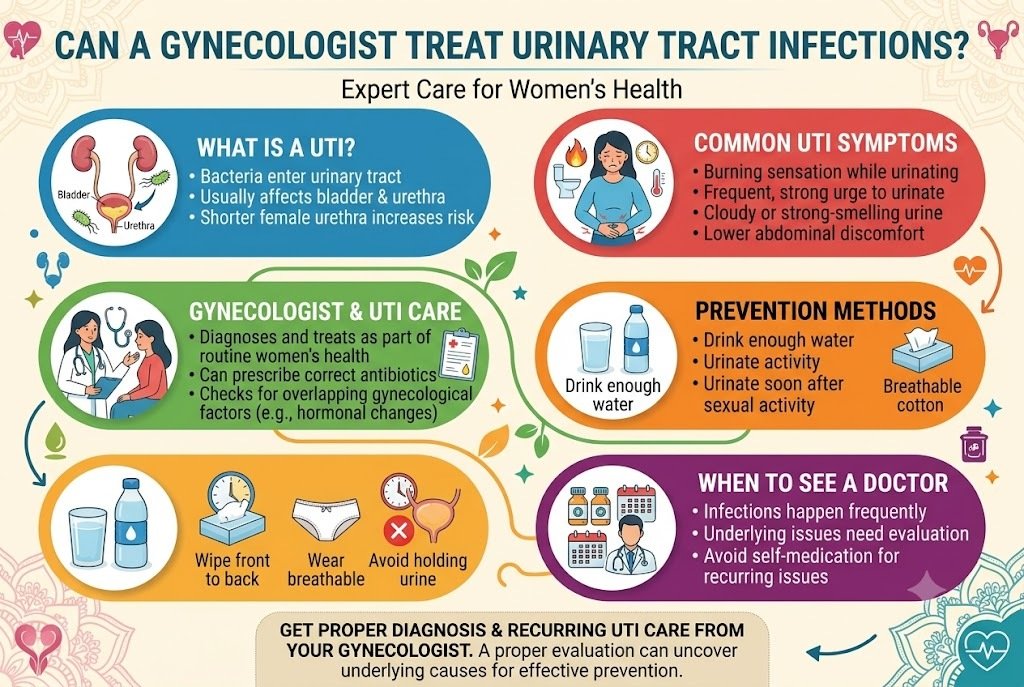
What exactly is a UTI?
A Urinary Tract Infection happens when bacteria enter the urinary tract, the system responsible for removing waste from your body through urine. This includes the bladder, urethra, and sometimes the kidneys.
Common signs include:
- Burning sensation while urinating
- Frequent urge to urinate, even with little urine coming out
- Cloudy or strong-smelling urine
- Mild lower abdominal discomfort
- In some cases, a mild fever
Most UTIs are simple bladder infections. They’re uncomfortable, not dangerous, and they respond well to timely treatment.
Why Do Women Get UTIs So Often?
Women have a shorter urethra than men, which means bacteria have a shorter distance to travel to reach the bladder. Add in factors like pregnancy, menopause, sexual activity, and certain hygiene habits, and it’s easy to see why UTIs are so common among women.
This overlap with women’s health is exactly why gynecologists are so often involved in UTI care, not just in obstetric or reproductive concerns.
So, Can a Gynecologist Treat a UTI?
Yes, absolutely. In fact, for most women, a gynecologist is often the first and most practical choice.
Here’s why:
- Gynecologists regularly diagnose and treat urinary infections as part of routine women’s health care
- They can prescribe the right antibiotics after checking your urine sample
- They can identify whether your UTI is linked to other gynecological factors, like hormonal changes or vaginal infections that mimic UTI symptoms.
- They can guide you on prevention methods specific to your body and lifestyle.
Many women choose a gynecologist in Ahmedabad simply because it’s more convenient. She’s already familiar with your history, your hormonal patterns, and any related concerns, which makes diagnosis quicker and more accurate.
Simple Habits That Help Prevent UTIs
Prevention really does make a difference here. A few small habits go a long way:
- Drink enough water throughout the day to flush out bacteria
- Urinate soon after sexual activity
- Wipe front to back, not the other way around
- Avoid holding urine for long periods
- Wear breathable cotton underwear instead of tight synthetic fabric
None of these is complicated, but together they meaningfully lower your risk.
A Word on Recurring UTIs
If you find yourself getting a UTI every few months, that’s worth a proper conversation with your doctor rather than repeated self-medication. Recurring infections often have an underlying pattern, sometimes hormonal, sometimes related to hygiene routines, and identifying it early prevents unnecessary discomfort later.
Dr. Shailee Bhandari Parikh, a name many women in Ahmedabad trust for gynecological care, often points out that recurring UTIs shouldn’t be treated as routine or ignored. A proper evaluation usually uncovers the underlying cause of recurrent infections, making future prevention far more effective.
You Deserve Expert Care
A UTI can be uncomfortable, but it’s rarely something to panic about. In most cases, your gynecologist is exactly the right person to see, someone who already understands your body and can treat the infection quickly and effectively. Don’t wait it out or ignore it. Timely treatment usually means the discomfort clears up within a few days.