

Is RIRS Surgery Painful?
What's the Recovery Pain Like?
Introduction
If you’ve just been told that you need RIRS surgery for kidney stones, your first question is probably: Will it hurt? That’s one of the most common things patients in Ahmedabad ask, and honestly, it’s a fair one. The good news is that the experience is far more comfortable than most people imagine before going in.
Let’s walk through what RIRS actually involves and what you can realistically expect — before, during, and after.
What Exactly Is RIRS?
RIRS stands for Retrograde Intrarenal Surgery. In simple terms, it’s a procedure where your doctor uses a thin, flexible camera to enter the kidney through the natural urinary passage, no cuts, no stitches, no external incisions. A laser then breaks the kidney stone into tiny fragments that the body passes out on its own. Because nothing is cut open, it falls under the category of minimally invasive surgery.
Does the Surgery Hurt?
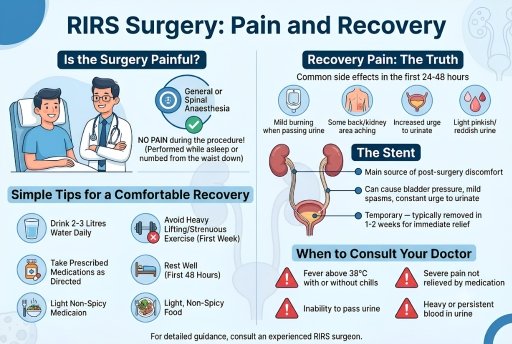
Not at all — during the procedure itself. RIRS is performed under general or spinal anaesthesia. That means you’ll either be fully asleep or numbed from the waist down. You won’t feel a thing while the surgery is happening.
Most patients wake up feeling a bit drowsy but not in any serious pain. If a ureteral stent (a soft, thin tube placed inside to help the kidney drain properly) has been inserted, there may be a mild pressure sensation, but nothing sharp or severe.
What Is Recovery Like?
This is the question everyone actually wants answered. Here’s the straight truth: RIRS recovery is genuinely mild compared to open surgery or traditional stone removal methods.
In the first 24 to 48 hours after the procedure, it’s common to experience:
- A mild burning sensation when passing urine
- Some back pain or aching near the kidney area
- A slightly increased urge to urinate
- Light pinkish or reddish colour in the urine (completely normal — it fades quickly)
None of these means something is wrong. They’re the body’s natural response to the procedure. Your doctor will prescribe appropriate medication to keep you comfortable, along with advice to stay well-hydrated.
The Stent: What to Expect
If a ureteral stent was placed during your surgery, it’s usually the main source of post-surgery discomfort. It can cause bladder pressure, mild spasms, or a constant urge to urinate. The good news — this is temporary.
The stent is generally removed within one to two weeks, and most patients feel noticeably better almost immediately after it comes out.
How Long Does Discomfort Last?
The peak of any discomfort usually falls within the first two to three days. After that, it steadily gets better. Most people return to light, everyday activities within a week. Full recovery typically takes two to three weeks, depending on the size of the stone and your overall health.
Simple Tips for a Comfortable Recovery
- Drink 2 to 3 litres of water every day to flush out stone fragments and calm the urinary tract.
- Avoid heavy lifting or strenuous exercise for at least the first week
- Take all prescribed medications as directed — don’t stop early
- Rest well during the first 48 hours
- Stick to light, non-spicy food to avoid irritating your system
When to Consult Your Doctor
Mild discomfort is expected, but these signs mean you should reach out to your RIRS specialist without delay:
- Fever above 38°C with or without chills
- Severe pain that doesn’t ease with prescribed medication
- Inability to pass urine
- Heavy or persistent blood in the urine
These could signal a complication that needs prompt attention from a qualified RIRS surgeon.
Your Recovery Starts with the Right Conversation
Pain tolerance and recovery vary from person to person. The most reliable way to understand what your recovery will look like is to speak directly with an experienced RIRS surgeon who knows your medical history and stone details.
At Shyam Specialist Hospital in Ahmedabad, he brings extensive hands-on experience in treating kidney stone cases through minimally invasive techniques, including RIRS. Patients under Dr. Kandarp Parikh’s care receive clear, step-by-step guidance from the very first consultation all the way through recovery. If you have concerns about post-surgery pain or simply want to understand your options better, book a consultation and get the answers you deserve.