

What Are the Benefits of
Robotic Surgery for Prostate Cancer?
Introduction
Hearing the words “prostate cancer” can be difficult to process at first. But treatment for it has come a long way, and one advancement that’s significantly improved outcomes is robotic surgery.
If you or someone in your family is exploring treatment options, understanding how this technology works can make the whole process feel a lot less intimidating.
What Exactly Is the Prostate?
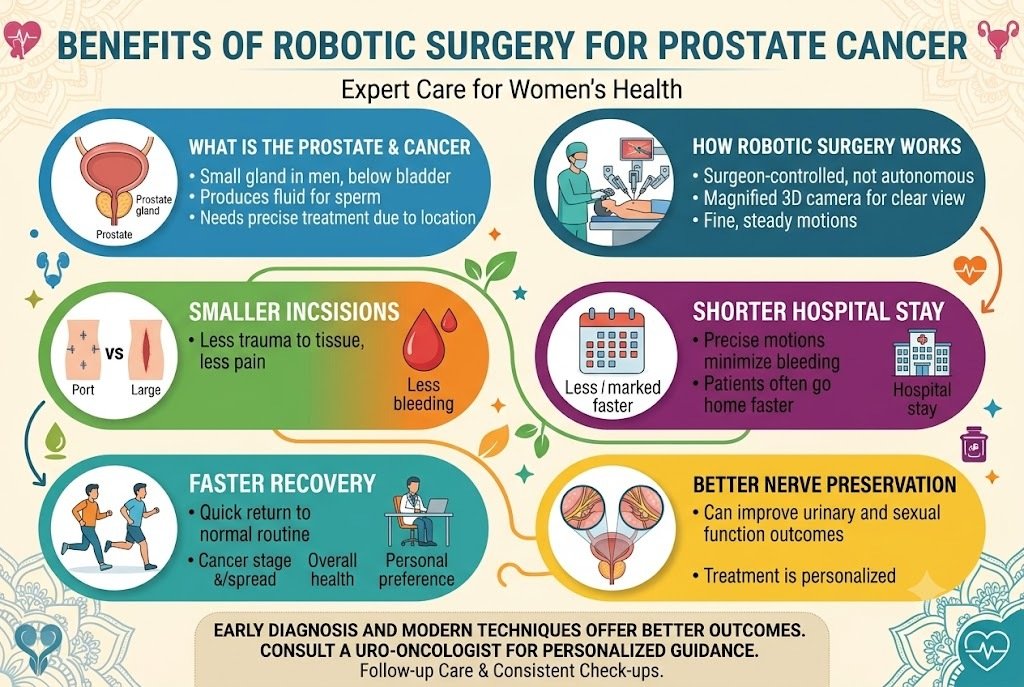
The prostate is a small gland found only in men, located just below the bladder. It plays a role in producing fluid that helps transport sperm. Because of its location, close to the bladder and nerves that control urinary and sexual function, treating prostate cancer requires a lot of precision.
This is exactly where robotic surgery has made a real difference.
How Does Robotic Surgery Actually Work?
Despite the name, a robot doesn’t perform the surgery on its own. A trained surgeon controls every single movement through a console, while the robotic arms translate those movements into small, precise actions inside the body.
Think of it like this:
- The surgeon sits at a control console nearby
- Tiny instruments are inserted through small cuts, not one large incision
- A magnified 3D camera gives a much clearer view of the area than the human eye alone
- The surgeon’s hand movements are scaled down into extremely fine, steady motions inside the body
This level of control is particularly valuable in prostate cancer surgery, given how close the gland sits to delicate nerves and muscles.
Key Benefits of Robotic Surgery for Prostate Cancer
Robotic prostate surgery is one of the most advanced procedures performed in robotic urology surgery, offering greater precision and improved patient outcomes for complex urological conditions
- Smaller cuts, less trauma to the body. Traditional open surgery requires a larger incision. Robotic surgery works through a few small ports, meaning less damage to surrounding tissue.
- Reduced blood loss during surgery: Because of the precision involved, robotic procedures typically result in significantly less bleeding compared to open surgery.
- Shorter hospital stay: Many patients go home within a couple of days, compared to a longer recovery period after traditional surgery.
- Faster return to daily activities: Smaller incisions generally mean less pain after surgery and a quicker return to normal movement and routine.
- Better nerve preservation: Since the prostate sits close to nerves responsible for urinary control and sexual function, the precision of robotic instruments helps surgeons work around these nerves more carefully, which can improve long-term outcomes in these areas.
- Lower risk of infection: Smaller incisions naturally reduce the exposed area, which lowers the chances of post-surgical infection.
Is Robotic Surgery Right for Everyone?
Not necessarily, and that’s completely normal. The right treatment approach depends on several factors:
- The stage and spread of the cancer
- The patient’s overall health and age
- Whether the cancer is confined to the prostate or has spread further
- Personal preferences and prior medical history
This is why a detailed consultation matters so much. A specialist can walk you through whether robotic surgery, radiation, hormone therapy, or a combination approach makes the most sense for your specific situation.
What Recovery Typically Looks Like
Recovery varies from person to person, but here’s a general idea of what to expect:
- A short hospital stay, often just one to two days
- A temporary urinary catheter for a short period after surgery
- Gradual return to light activity within a couple of weeks
- Follow-up visits to monitor healing and check cancer markers
Most men return to their routine within four to six weeks, though this timeline can vary based on individual health.
Who Is a Candidate for Robotic Surgery?
Not every prostate cancer patient needs to go the robotic route, and that’s perfectly fine. Your specialist typically looks at a few key factors before recommending it:
- Cancer that’s still confined to the prostate, not spread to other organs
- Overall good health, with no major conditions that make surgery risky
- A body type and prior surgical history that suit a minimally invasive approach
- Personal comfort with surgery over other options like radiation or active monitoring
A Word of Reassurance
A prostate cancer diagnosis often brings a lot of fear, largely because of the word “cancer” itself. But it’s worth remembering that prostate cancer, especially when caught early, tends to be one of the more manageable cancers, and treatment options today are far more advanced and less invasive than they were even a decade ago.
Dr Aditya Parikh, who names several patients in Ahmedabad trust for urological care, often reassures patients that early diagnosis combined with modern techniques like robotic surgery has significantly improved both safety and recovery outcomes for prostate cancer patients.
What This Means for You
If you have been diagnosed with prostate cancer, consulting an experienced uro-oncologist can help you understand all available treatment options. Early diagnosis and personalized treatment planning play an important role in achieving the best possible outcomes. Schedule a consultation with Dr. Aditya Parikh to learn whether robotic prostate surgery is the right option for you.