

Can Prostate Cancer Be Cured If Detected Early?
Introduction
If you or someone in your family has just heard the words “prostate cancer,” it’s natural for your mind to race. But here’s something worth holding onto right from the start: prostate cancer, when caught early, is one of the most treatable cancers today. That’s not wishful thinking; it’s what years of clinical experience and consistent medical data show.
Let’s break down what “early detection” really means, why it matters so much, and what your options look like if you’re navigating this here in Ahmedabad.
What Exactly Is Prostate Cancer?
The prostate is a small gland, about the size of a walnut, that sits just below the bladder in men. It produces part of the fluid found in semen. Uro-oncology happens when cells in this gland start growing abnormally and out of control. Here’s the reassuring part: prostate cancer usually grows slowly. Unlike some aggressive cancers that spread fast, this one often gives doctors and patients enough time to catch it and act.
The Short Answer: Yes, Early Detection Changes Everything
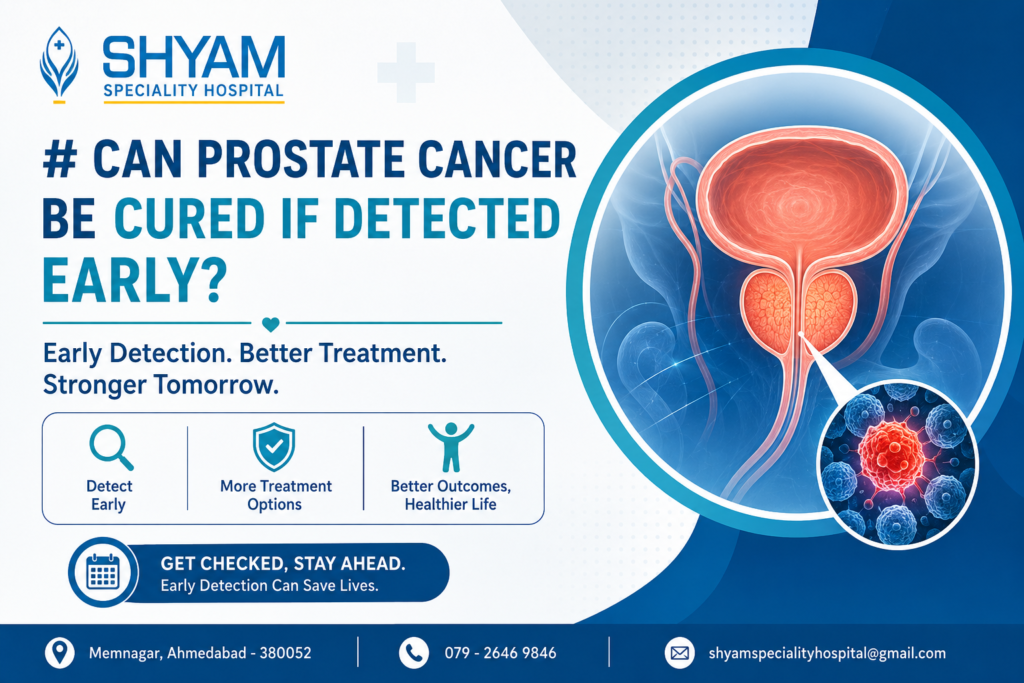
When prostate cancer is found while it’s still confined to the prostate gland (what doctors call “localized” cancer), the outlook is genuinely encouraging. Treatment success rates at this stage are very high, and many men go on to live full, normal lives after treatment.
The catch? “Early” is the operative word. Once cancer spreads beyond the prostate to nearby tissue, bones, or other organs, treatment shifts from a straightforward cure toward long-term management.
This is exactly why screening and awareness matter so much, especially for men over 50 or those with a family history of prostate cancer.
Why Early Detection Makes Such a Big Difference
- More treatment options are on the table. Early-stage cancer can often be treated with surgery, radiation, or even active surveillance (a “watch and wait” approach), instead of more intensive treatments.
- Fewer side effects. Smaller, localized tumours usually mean less invasive treatment, which translates to quicker recovery and fewer lasting effects.
- Better long-term outcomes. The five-year survival rate for localized prostate cancer is excellent, well above 95% in most published data.
- Less emotional and financial strain. Catching cancer early generally means shorter treatment timelines and lower overall costs.
How Is Prostate Cancer Detected Early?
Two simple checks do most of the heavy lifting:
- PSA test (Prostate-Specific Antigen test). A simple blood test that measures a protein made by the prostate. Higher-than-normal levels can be an early warning sign, prompting further evaluation.
- DRE (Digital Rectal Exam). A quick physical exam where a doctor checks the prostate for any unusual texture or size. It sounds intimidating, but it takes less than a minute and can catch things a blood test might miss.
Neither test alone confirms cancer. They simply flag when something needs a closer look, usually through imaging or a biopsy.
Who Should Get Screened, and When?
Generally speaking:
- Men aged 50 and above should talk to their doctor about screening.
- Men aged 45 and above with a family history of prostate cancer should start the conversation earlier.
- Men noticing symptoms like frequent urination, a weak urine stream, or discomfort shouldn’t wait for a “routine” age to get checked.
There’s no need for anxiety here. A screening conversation is just that, a conversation. It doesn’t mean something is wrong.
What Are the Treatment Options?
When prostate cancer is caught early, doctors typically choose from:
- Active surveillance: regular monitoring without immediate treatment, ideal for very slow-growing cancers.
- Surgery (prostatectomy): removal of the prostate gland, often done today with minimally invasive or robotic techniques.
- Radiation therapy: targeted treatment that destroys cancer cells while preserving surrounding tissue.
- Hormone therapy: sometimes used alongside other treatments to slow cancer growth.
The right choice depends on the person’s age, overall health, and how the cancer is behaving. This is exactly why a personalised evaluation matters far more than following a one-size-fits-all approach.
Getting the Right Care in Ahmedabad
For men in the city, reliable Prostate Cancer Treatment in Ahmedabad is more accessible than many people assume. At Shyam Speciality Hospital, Dr Aditya Parikh and the urology team focus on early diagnosis through PSA testing, careful evaluation, and treatment plans built around each patient’s specific situation, not a generic template.
Prostate cancer isn’t something to fear into silence. It’s something to stay informed about. The data is clear: early detection dramatically improves outcomes, widens treatment choices, and often leads to a full recovery. A simple conversation with your doctor, a routine PSA test, or a quick check-up could make all the difference.