

What to Expect After Kidney Stone Removal Surgery: Recovery, Stents, and Pain Relief
Introduction
So, the stone is finally out. That’s a huge relief, but if you’re sitting there wondering why you still feel discomfort, what that tube inside you is doing, or when you’ll actually feel “normal” again, you’re not alone. Recovery after kidney stone surgery raises more questions than most people expect.
Let’s walk through what typically happens in the days and weeks after the procedure, so nothing catches you off guard.
First, a Quick Recap: What Kind of Surgery Did You Have?
Kidney stone removal isn’t a single, one-size-fits-all procedure. Depending on the size and location of the stone, doctors usually choose one of these:
- URS (Ureteroscopy) — a thin scope is passed through the urinary tract to locate and break up the stone, often using a laser.
- PCNL (Percutaneous Nephrolithotomy) — a small incision in the back is used to remove larger stones directly from the kidney.
- RIRS (Retrograde Intrarenal Surgery) — a flexible scope reaches the kidney through natural passages, avoiding any cuts.
Each comes with a slightly different recovery pace, but the overall experience of some discomfort, a stent, and a gradual return to normal life is fairly similar across the board.
Why Is There a Stent Inside Me?
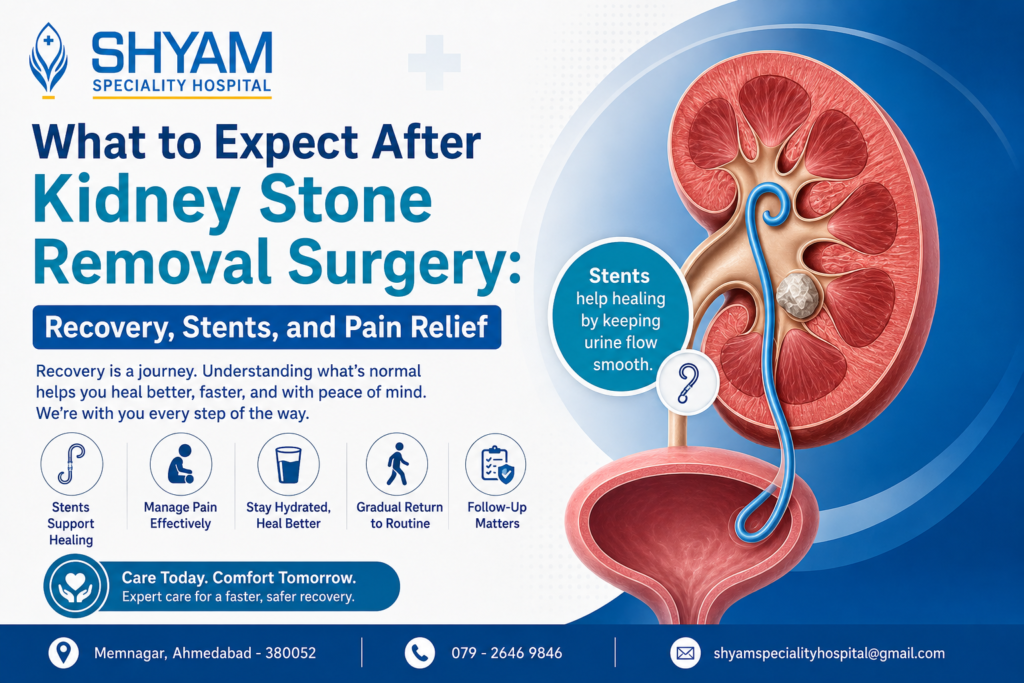
This is probably the question people ask the most. A stent (often called a “DJ stent” or “double-J stent”) is a soft, thin, hollow tube placed inside the ureter, the tube connecting your kidney to your bladder.
Its job is simple: it keeps the ureter open and allows urine to drain properly while the area heals from swelling or irritation caused by the stone or the surgery itself.
A few honest things to know about stents:
- They can cause discomfort. A mild pulling sensation, occasional lower back pain, or a frequent urge to urinate is common and expected.
- They’re temporary. Most stents stay in place for one to two weeks, though your doctor will decide the exact timeline based on your case.
- Removal is quick. Taking the stent out is usually a short outpatient procedure, far simpler than the surgery itself.
If the discomfort feels severe or you notice fever, that’s when it’s time to call your doctor rather than wait it out.
What Does Recovery Actually Look Like?
Recovery generally happens in phases:
Day 1 to 3: Expect some tiredness, mild pain, and possibly blood-tinged urine; this is normal and settles quickly. Pain relief medication and plenty of fluids are usually the main focus here.
Week 1: Most people can resume light daily activities. Walking is encouraged; it actually helps the body heal and reduces stiffness.
Weeks 2 to 3: This is typically when the stent is removed, if one was placed. Many patients feel noticeably more comfortable right after.
By Week 4: Most people are back to their routine, including work and normal physical activity, though heavy lifting or intense exercise may need to wait a bit longer.
Managing Pain the Right Way
Some discomfort is expected, but it shouldn’t run your life. A few practical tips:
- Take pain relief medication exactly as prescribed, not just when the pain becomes unbearable.
- Drink plenty of water throughout the day; it helps flush the urinary tract and can genuinely ease irritation.
- Avoid holding urine for long periods, especially with a stent in place.
- Use a warm compress on the lower back or abdomen if cramping occurs.
When Should You Actually Worry?
Most recovery is smooth, but it’s worth knowing the signs that need prompt medical attention:
- High fever or chills
- Heavy or persistent bleeding in urine
- Inability to urinate
- Severe pain that doesn’t ease with medication
Getting the Right Follow-Up Care in Ahmedabad
Good recovery isn’t just about the surgery itself; it’s about the follow-up. For anyone undergoing kidney stone removal surgery in Ahmedabad, having a urology team that checks in at the right intervals, removes the stent on schedule, and screens for any recurrence risk makes the whole process far less stressful.
At Shyam Speciality Hospital, Dr Kandarp Parikh and the urology team focus on exactly that: clear guidance at every stage, from the day of surgery to the final follow-up, so patients aren’t left guessing about what’s normal and what isn’t.
Recovering from kidney stone surgery is usually straightforward once you know what to expect. A stent, some mild discomfort, and a few weeks of gradual healing are all part of a normal process, not something to be alarmed about. Staying hydrated, following your medication schedule, and keeping your follow-up appointments will get you back on your feet faster than you might think.