

What Is Optilume and How Does It Treat Urethral Stricture?
Introduction
If you’ve been told you have a urethral stricture, chances are you’ve already dealt with the frustrating symptoms of a weak stream, straining while urinating, or feeling like your bladder never fully empties. The good news is that treatment for this condition has come a long way, and one of the more advanced options available today is called Optilume.
What Is a Urethral Stricture?
The urethra is the tube that carries urine out of the body. A stricture happens when scar tissue narrows this tube, making it harder for urine to pass through.
It can happen because of:
- Past infections
- Injury or trauma to the pelvic area
- Previous catheter use
- Prior surgery in the region
- Sometimes, no clear cause at all
Common symptoms include a slow or weak urine stream, straining to urinate, frequent urination, and, in some cases, recurring urinary infections.
How Was This Traditionally Treated?
For years, doctors relied mainly on two approaches:
- Urethral dilation or urethrotomy — widening or cutting the narrowed area using a scope. It’s minimally invasive, but strictures often return within a year or two.
- Urethroplasty — a more involved surgical reconstruction that offers longer-lasting results but comes with a longer recovery and a bigger procedure overall.
Neither is wrong, but each comes with a trade-off: a quick fix that often doesn’t last, or a more permanent one that takes more out of you.
So, What Is Optilume?
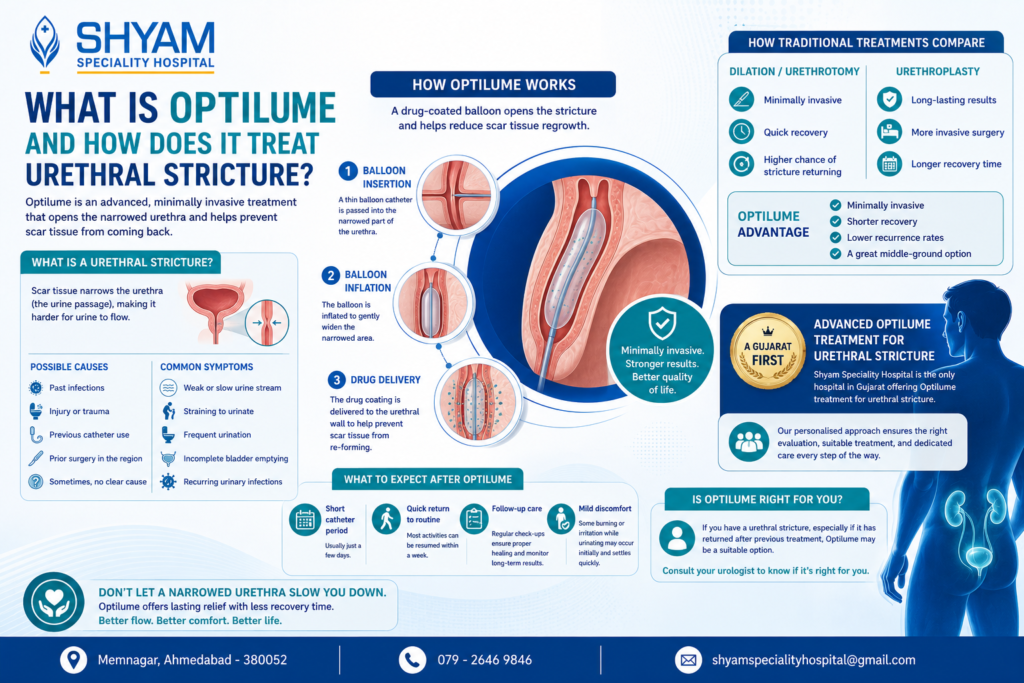
Optilume is a drug-coated balloon technology designed to bridge that gap. Here’s the simple version of how it works:
- A small balloon is inserted into the narrowed part of the urethra.
- The balloon is gently inflated to widen the stricture, similar to a standard dilation.
- The balloon is coated with a medication that helps prevent scar tissue from re-forming as the area heals.
That last part is what makes Optilume different. While traditional dilation simply stretches the narrowed area, scar tissue can gradually form again, leading to recurrent urethral stricture. Optilume is designed to help reduce scar tissue regrowth, offering a more durable treatment option. As part of reconstructive urology, this approach can provide longer-lasting results and may help reduce the need for repeated procedures.
Why Does This Matter for Patients?
A few practical advantages stand out:
- Minimally invasive — no large incisions or major reconstructive surgery involved.
- Shorter procedure and recovery time — many patients go home the same day.
- Lower recurrence rates compared to standard dilation alone.
- A useful alternative for patients who aren’t ready for, or don’t want, a full urethroplasty just yet.
It’s worth being clear-eyed here too: Optilume isn’t the right fit for every stricture. Its suitability depends on the length, location, and severity of the narrowing, which is exactly why proper evaluation matters before deciding on a treatment path.
A Gujarat First: Advanced Optilume Treatment for Urethral Stricture
Shyam Speciality Hospital is currently the only hospital in Gujarat offering Optilume treatment for urethral stricture. This advanced, minimally invasive treatment provides patients with access to a modern option for managing urethral strictures within Gujarat.
The Optilume program follows a personalised approach, with each patient carefully assessed to determine whether the treatment is appropriate for their condition, followed by dedicated care throughout the treatment and recovery process.
What Does Recovery Look Like?
Recovery after Optilume is typically much easier than after traditional urethroplasty:
- A short catheter period, usually just a few days, helps the area heal.
- Most people resume normal daily activities within a week.
- Follow-up visits help track how well the urethra is healing and confirm the stricture isn’t returning.
Mild discomfort during urination in the first few days is normal and usually settles quickly.
Is Optilume Right for You?
If you’ve dealt with a urethral stricture before, whether it’s your first diagnosis or a stricture that keeps coming back after previous treatment, it’s worth discussing Optilume as an option with a urologist. It won’t be the answer for everyone, but for the right candidates, it offers a genuinely effective middle ground between repeated dilations and major reconstructive surgery.
What This Means for You
Urethral stricture doesn’t have to mean choosing between a short-term fix and a major surgery. Optilume offers a middle path, less invasive than reconstructive surgery, but designed to last longer than standard dilation. If your symptoms have been affecting your daily life, it’s worth having a proper conversation about whether this newer approach could work for you.