

When Should I See My Gynecologist About Pelvic Pain?
Introduction
Pelvic pain is one of those things a lot of women just learn to live with. A twinge here, some discomfort there, it’s easy to brush it off as “probably nothing” or “just part of being a woman.” But not all pelvic pain is the same, and knowing when it’s worth a proper check-up can save you months, sometimes years, of unnecessary discomfort.
Let’s talk about what’s normal, what’s not, and when it’s time to actually pick up the phone.
What Counts as Pelvic Pain?
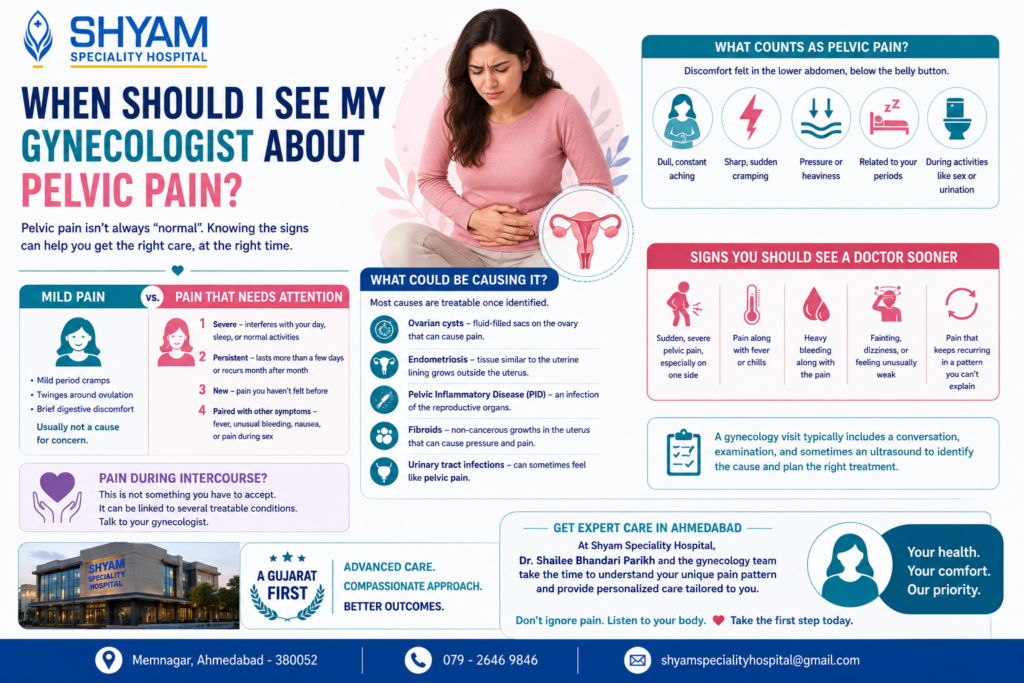
Pelvic pain simply refers to any discomfort felt in the lower abdomen, below the belly button. It can show up as:
- Dull, constant aching
- Sharp, sudden cramping
- Pressure or heaviness
- Pain during specific activities, like intercourse or urination
It can be tied to your menstrual cycle, or it can show up completely unrelated to it and that distinction matters a lot when it comes to figuring out the cause.
Mild Pain vs. Pain That Needs Attention
Some pelvic discomfort is genuinely normal. Mild period cramps, a bit of twinging around ovulation, or brief digestive-related discomfort usually aren’t cause for concern.
Here’s where it starts to matter more:
- The pain is severe — bad enough that it interferes with your day, your sleep, or your ability to function normally.
- It’s persistent — lasting more than a few days, or showing up repeatedly month after month.
- It’s new — a kind of pain you haven’t experienced before, especially if it appears suddenly.
- It’s paired with other symptoms — like fever, unusual bleeding, nausea, or pain during sex.
What Could Be Causing It?
Pelvic pain has a long list of possible causes, including gynecological oncology, and most of them are very treatable once identified. Some of the more common ones include:
- Ovarian cysts — fluid-filled sacs on the ovary that can cause pain, especially if they grow large or rupture.
- Endometriosis — a condition where tissue similar to the uterine lining grows outside the uterus, often causing pain that’s worse during periods.
- Pelvic Inflammatory Disease (PID) — an infection of the reproductive organs that needs prompt treatment.
- Fibroids — non-cancerous growths in the uterus that can cause pressure and pain.
- Urinary tract infections — which can sometimes feel like pelvic pain rather than a typical bladder issue.
The point isn’t to self-diagnose from this list, but to understand that pelvic pain almost always has an identifiable, manageable cause.
Pain During Intercourse: Don't Just Push Through It
This one deserves its own mention because so many women quietly deal with it without saying anything. Pain during intercourse is not something you have to accept as “just how it is.” It can be linked to several treatable conditions, and bringing it up with your gynecologist even if it feels awkward is genuinely worth it.
Signs You Should See a Doctor Sooner Rather Than Later
A few situations call for a prompt visit, not a “let’s wait and see” approach:
- Sudden, severe pelvic pain, especially on one side
- Pain along with fever or chills
- Heavy bleeding along with the pain
- Fainting, dizziness, or feeling unusually weak alongside the pain
- Pain that keeps recurring in a pattern you can’t explain
These signs don’t automatically mean something serious, but they’re worth getting checked promptly rather than monitored from home.
A Better Path Forward
A gynecology visit for pelvic pain is usually far less intimidating than people expect. It typically involves a conversation about your symptoms and cycle, a physical examination, and sometimes an ultrasound to get a clearer picture of what’s going on internally. Most causes can be identified fairly quickly once the right questions are asked and the right tests are run.
Finding the Right Gynecologist in Ahmedabad
If pelvic pain has been part of your routine for longer than it should be, it’s worth having it properly looked at instead of continuing to work around it. Choosing an experienced gynecologist in Ahmedabad means getting a clear diagnosis and a treatment plan that actually addresses the cause, rather than just managing the symptom.
At Shyam Speciality Hospital, Dr. Shailee Bhandari Parikh takes the time to understand each patient’s specific pain pattern before recommending next steps, so the care you receive is tailored to you rather than generic. If pelvic pain has been quietly affecting your day-to-day life, this is a good moment to finally get it addressed.
What This Means for You
Pelvic pain isn’t something you have to simply tolerate. While mild, occasional discomfort is often harmless, pain that’s severe, persistent, or paired with other symptoms deserves a proper evaluation. Trusting your own sense of what feels “off” and acting on it is one of the simplest ways to take care of your long-term health.